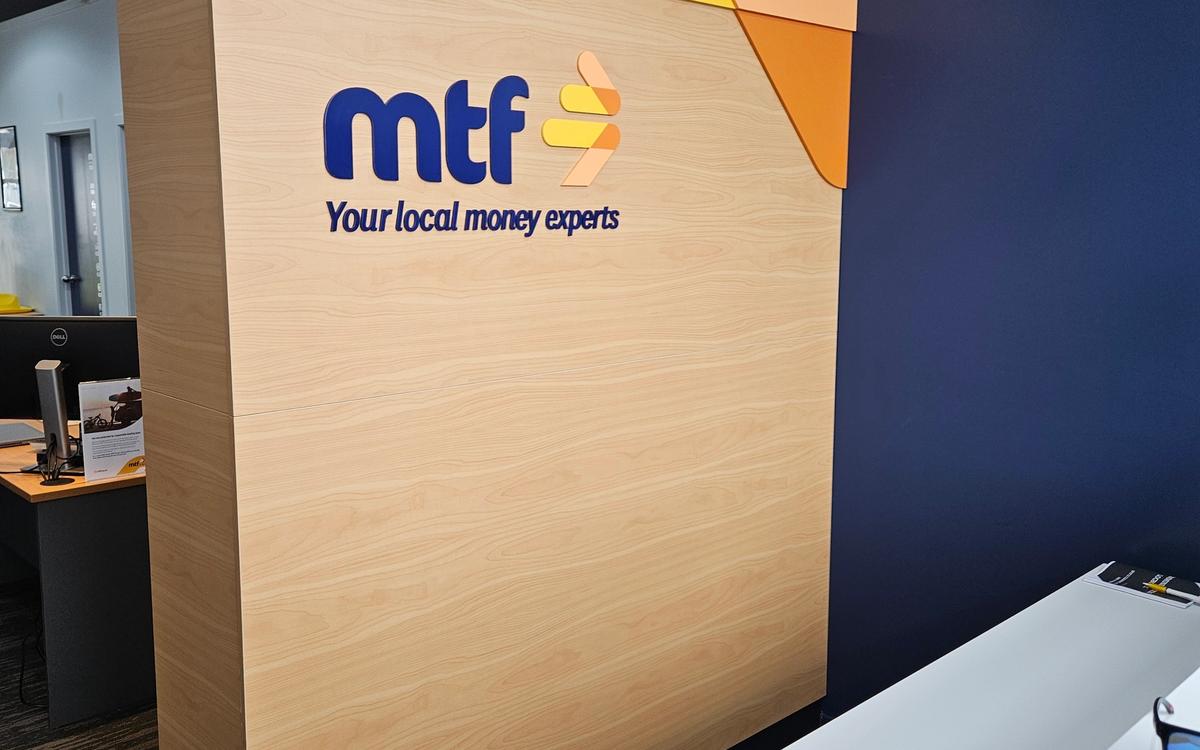
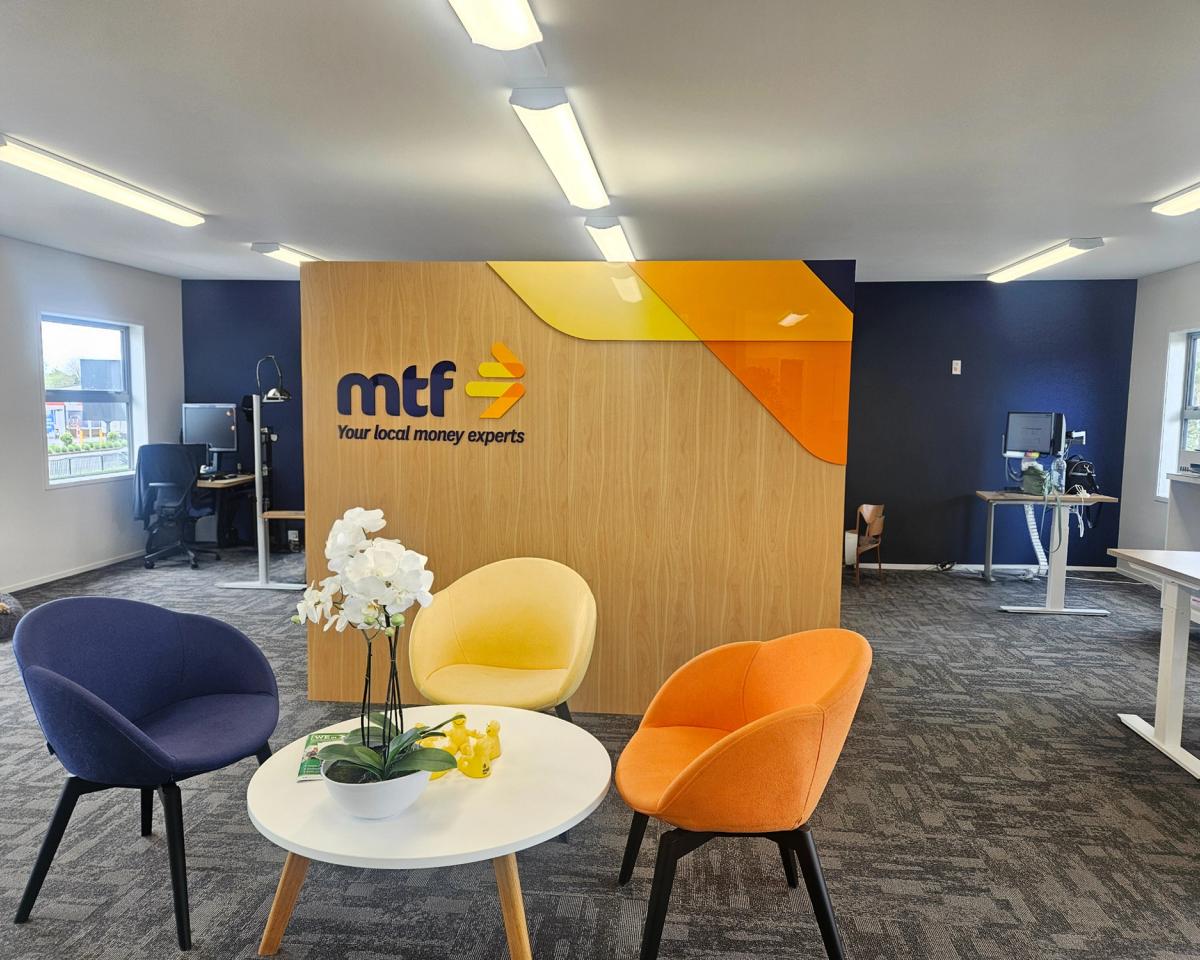
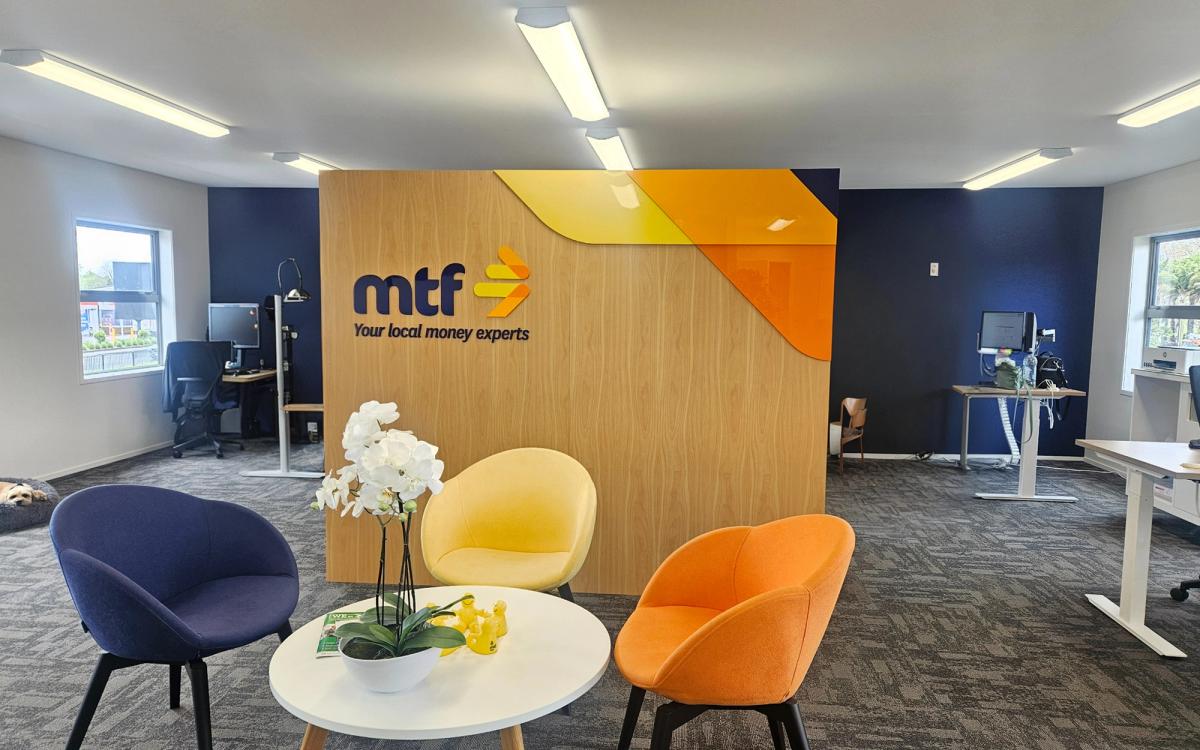
MTF Kumeu: reception feature wall.
Multi-layer painted acrylic, automotive-finished to a mirror gloss, built as the reception focal point for the new branch fit-out.
Manufactured and installed
Dimensional letters for shopfronts, fascia signage and reception walls, specified to suit the building, the brand and how long they need to last. Painted acrylic, ACM, brushed-metal looks, flush-mounted or illuminated. Designed and built in-house, installed across Auckland.
Choose your 3D letter project.
Exterior and interior letters call for different materials, mounting and finishes. Pick the one that matches your project and you'll see only what applies: materials, mounting, pricing and the questions that come up. You can switch any time.

We actually know exteriors.
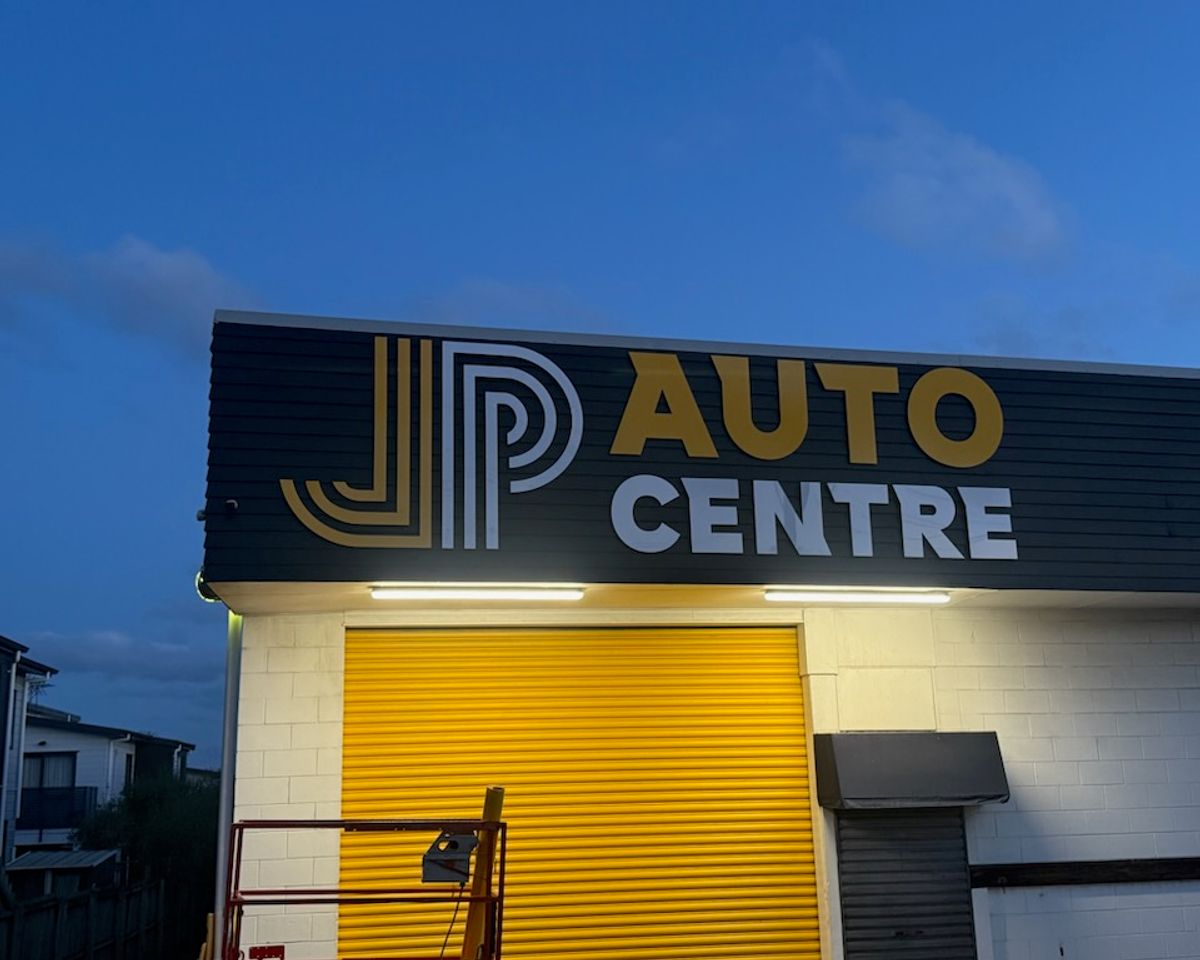
Exterior 3D letters. Fascia signage, shopfront letters, and the business name that has to read from the street and hold up to Auckland weather.
Routed ACM panel stock suits most exterior letters. Thicker acrylic gives premium depth where the building and finish call for it. Mounted to suit the building, not just the letter shape.
Either as one piece of a wider signage package or a clean single fascia unit, the first conversation is the site visit, where we scope the plan against the building you’re actually working with.
Six materials. Picked to suit the building.
Exterior letters start as ACM or acrylic, then get finished to suit the brand, the building and how long they need to last. Some colours come as factory-finished panels; others are painted or vinyl-faced. You don’t need to pick the combination yourself; we specify it at quote.
ACM Panel Stock
This is a SUBSTRATE choice, paired with a finish system below.
The dominant exterior substrate: light, weather-handling composite.
Default exterior substrate. Suits most fascia and shopfront letters at 3mm or 4mm. Step up to 6mm for premium depth.
Thicker Acrylic
This is a SUBSTRATE choice, paired with a finish system below.
Cast acrylic block. Where the building face and brand demand letter depth ACM cannot quite deliver.
When the letter needs to project off the wall as a sculptural piece. Heavier than ACM, which affects the mounting plan and stand-off engineering.
Alucosign FEVE
This is a FINISH SYSTEM, applied at factory to ACM substrate.
Factory-painted ACM in the manufacturer’s standard FEVE colour range. FEVE (fluoropolymer) coating with strong colour retention and weathering.
When the brand colour matches an existing factory FEVE option. Saves the custom paint step and shortens lead time.
2K Autothane Painted
This is a FINISH SYSTEM: custom-colour-matched paint applied through a trade-partner workshop.
Custom-colour-matched paint system. 2K polyurethane sprayed through trade-partner workshop.
When the brand colour falls outside the factory FEVE range. Adds workshop time but unlocks any colour and any gloss level.
Specialty ACM
This is a SUBSTRATE choice where the finish IS the aesthetic, with no separate finish system needed.
Substrate where the surface finish itself is the design statement: mirror, brushed metal, or wood-look.
For interior or sheltered exterior feature work where the metal-look or grain matters more than the colour. Less weather-tolerant than painted ACM, so talk to us about the location.
Vinyl Overlay
This is an OVERLAY, applied OVER a substrate to add colour, multi-colour artwork, or specialty effects.
Vinyl applied over the routed panel face. Adds colour, brand artwork, or specialty effects where paint cannot cover economically or where flexibility matters.
When paint can’t economically cover a complex multi-colour brand. Shorter outdoor life than paint but cheap to refresh, with a common refresh cycle of 5–7 years on a cast print.
Workhorse white: most common base for printed or painted exterior
Premium black: strong commercial / hospitality pick
Factory-painted bright yellow: common brand-matched colour
Modern architectural look: anthracite face, silver-metallic reverse
Dramatic mirror finish: for feature pieces where the metal IS the design
Premium brushed-metal warmth: high-end commercial accent
Classic clear cast: for transparent depth or paint-back applications
Diffusing translucent white: common base for back-lit / LED
Solid opaque white: workhorse base for printed or painted overlays
Solid opaque black: premium dark finish
Translucent coloured tint: for ambient feature lighting effects
Mirror finish acrylic: feature pieces with the wow factor
Workhorse: most common base across all commercial work
Premium matte black: modern architectural look
Bright signage yellow: finance, automotive, brand-rollout (MTF-style)
Strong red: bold brand colour for high-impact applications
Vivid orange: common for service / retail brands
Deep navy blue: corporate / professional services
Available in any colour.
Pantone, RAL, hex, or supplied colour swatch. Matte through high gloss.
We confirm exact match at quote · trade-partner spray booth
Mirror polish: dramatic reflective finish for feature pieces
Warm gold-mirror: premium hospitality / retail
Modern brushed-aluminium look: architectural-grade
Warm brushed-copper: premium accent finish
Brushed dark grey: modern architectural
Wood-grain finish: for interior feature work
Single-colour overlay: change the panel face colour without painting
Multi-colour brand artwork on economy film: cost-efficient
Multi-colour artwork on premium cast film: better conformability
Premium accent: gold / silver / chrome-effect overlays
For 3D letters with internal LED: light passes through the print
Over-laminate on top of any vinyl for high-risk locations
Warranty figures reflect NZ-realistic supply through PSP. Manufacturer marketing claims may differ; the figures shown are what we stand behind for installed signage in NZ conditions. * See FAQ Q4 on warranty scope.
Mounted to the building. Built to last.
Cross-bars where the wall is thin, screw-through where the fascia takes it, painted stand-offs for depth, backing board where the building face won’t carry a clean install.
One hidden bar carries the whole word, fixed to sound structure at the ends only. Powder-coated to match the wall so it disappears from a few metres back, and every letter lands dead-level.
Fixings pass straight through the letter face into the fascia, then a colour-matched cap hides each head. The fastest, cleanest read from the street, when the substrate can actually take the load.
A carrier panel takes the letters and swallows the transformers, LED drivers and cabling behind it. Our answer when the building face won’t hold a clean fix, or when the illumination has to vanish.
Big ACM letters stand proud on wood or metal pegs cut to each letter and painted to match the wall. Throws a shadow line behind the word: depth you read before you read the text.
10+yrs
Achievable on premium installsManufacturer panel warranty on most materials we show. The installed sign itself typically lasts 5 to 10+ years, depending on finish, fixing and exposure.
Mounting fixes to the wall or fascia, not the letter shape. What you fix to is what determines how long it lasts. Nearly every material we show carries a 10-to-20-year panel warranty, so the headroom is already there; the painted finish on top is the typical longevity variable.
Actual life depends on UV exposure, coastal salt, the paint system, fixing method and cleaning. Where panel-product warranties apply, the scope is in Q4 of the FAQ.
The site visit usually scopes the plan, not the other way around.
On exterior work the building is the brief. Four things get assessed on the day. The plan comes out the other side already accounting for the building, not retrofitted to it.
Foot traffic, equipment access (scissor lift, scaffolding, work-at-height permits where applicable), and how the install lands safely on the day.
The substrate, where letters can be securely attached, what carries the load. The plan accounts for what’s actually there, not what the brief assumed.
What needs protecting or sequencing during install: tenants, passersby, neighbouring trades. What’s controlled, and in what order.
If you want halo-lit or backlit letters: where power comes from, the cabling route, where the transformer hides. Coordinated with an electrician on the day.
Want us to look at the building?
Send the address and whatever you have; vague or fully briefed, both work. The visit comes back with a plan you can actually build and price.
Where your job lands.
Exterior 3D letter projects typically start in the ranges below. Larger ACM fascia runs can become more efficient per letter once setup is done. Real cost varies with material, finish, access (scaffolding or scissor lift), illumination, and any electrical coordination required. We confirm exact pricing against your specific project at quote.
Routed ACM letters, smaller sets
For pricing context across the full signage range, see the business signage cost guide.
Common questions.
Direct answers. No padding.
Yes. 3D letters can be halo-lit or backlit depending on the material, the mounting surface, and the visual effect you want. Halo-lit and backlit acrylic letters typically use opal acrylic to diffuse the LED light evenly. Channel-cut letters need thicker material so the LED strip can sit inside the letter cleanly. We assemble the LED work in-house and coordinate the electrical connection with an electrician on install day. For the full illuminated signage product line including lightboxes and dedicated LED systems, see our LED Signs page.
Most exterior 3D letters are routed from ACM (aluminium composite panel). It is light and weather-resistant, and selected exterior ACM products may carry manufacturer panel warranties depending on the product and finish selected. Thicker acrylic suits premium-depth fascia work where ACM doesn’t quite deliver. Metal letters appear where the weight and finish justify the cost. For broader context on materials, see the acrylic signage in New Zealand guide.
Standard exterior fascia projects take around three weeks from brief approval. Complex exterior installs involving electrical work or scaffolding can run three to five weeks once those trades and hires are scheduled. Halo-lit and channel-cut work adds roughly a week for the additional CNC setup and LED assembly. We confirm timing at quote and build realistic buffer into every estimate.
We generally expect exterior 3D letters to last 5 to 10+ years when the material, finish, and fixing method suit the site. Selected ACM panel products carry manufacturer panel warranties of 10 to 20 years, depending on the product and finish selected. That warranty applies to the panel product itself. The installed sign’s real-world performance also depends on UV exposure, paint system, substrate, fixing method, coastal exposure, direct sun, and cleaning. We confirm the actual material and warranty position at quote.
Some fascia signs need Auckland Council consent, depending on your building’s zone, sign size, height, illumination, and placement. Most flat wall-mounted signs on business-zoned buildings within set limits are allowed without consent. Projecting signs, larger signs, illuminated signs in some areas, and any signs in residential or heritage zones may need approval. The Auckland Unitary Plan’s E23 Signs chapter and the Signs Bylaw 2022 are the authoritative source. We flag likely consent questions during quoting.
We flag it on the visit and work with you on alternatives before anything is cut. Common cases: the wall isn’t load-bearing where the brief asks for direct fixing, the cladding can’t take screws, or the surface is too weathered to hold a clean install. Solutions usually involve a backing board, a cross-bar mounted to sound structure, or a slight repositioning. We don’t proceed with an install that won’t hold.
Yes. Your brand guide is the spec: same colour, same finish at every location, so a franchise or multi-site rollout reads consistently across all of them.
Vector files (AI, EPS, PDF, SVG) become the CNC cut path directly. Raster files need a vectorisation step first. Send what you have and we’ll tell you what’s needed.
As much or as little as you have. Some clients arrive with a building address and a rough idea. Others send a full brief with sizing, material preference, brand files, and access notes. Both work. The site visit fills in what’s missing, and we tie down the specifics before anything is cut.
Question we haven’t covered here?
Talk to us
Where the logo owns the room.
Interior 3D letters. Reception walls, brand walls, and feature spaces built around the dimensional logo as the main visual anchor.
Painted acrylic or brushed-metal-effect ACM. Mounted flush where the wall allows, or stood proud on hidden hardware where you want depth.
Most projects start with a rough idea and a photo of the wall. The first conversation ties down the specifics: sizing, finish, mounting, and how the piece works alongside the rest of your office signage.
Four materials. Chosen for finish and feel.
Indoors there’s no weather to beat, so the choice comes down to finish and feel. Painted acrylic is the premium route; standard acrylic, brushed-metal ACM, and vinyl each give a different look.
You don’t need to pick the material yourself; we match it to the look you’re after, the wall and the budget.
Painted Acrylic
The premium interior route: cast acrylic with the automotive paint finish applied.
Cast acrylic, automotive-painted to any brand colour. The premium interior route.
When the colour has to be exact and the finish flawless: any brand colour, any gloss, with the full automotive paint process behind it.
See the paint processAcrylic
The material’s own look, with no paint step. The acrylic itself is the finish.
Acrylic left as its own finish: clear, frosted, opal, tinted or mirror.
When you want the acrylic itself to carry the look, or a clean base for lit and see-through pieces.
Specialty ACM
Metal look without a paint step: the surface finish itself is the design.
A metal-look panel where the surface itself is the finish: brushed, mirror, or timber-grain.
When you want a metal-look or timber-look finish without the cost of fabricated metal or custom paint.
Vinyl Overlay
Applied OVER the acrylic face, to add colour or multi-colour artwork.
Vinyl applied over the letter face: solid colour, full-colour print, or metallic foil.
When the artwork is detailed or might change. The easiest finish to update later, and the most forgiving for busy multi-colour brands.
Available in any colour.
Pantone, RAL, hex, or supplied colour swatch. Matte through high gloss.
We confirm exact match at quote · trade-partner spray booth
Classic clear cast: transparent depth or paint-back applications
Satin-matt face: soft, glare-free, premium tactile look
Diffusing translucent white: the go-to base for back-lit / LED
Opaque white: workhorse base for printed or painted overlays
Opaque black: premium dark finish for reception pieces
Translucent coloured tint: for ambient feature lighting effects
Mirror-finish acrylic: feature pieces with the wow factor
Modern brushed-aluminium look: architectural-grade
Warm brushed-copper: premium accent finish
Brushed dark grey: modern architectural feature
Mirror polish: dramatic reflective finish for feature pieces
Warm gold-mirror: premium hospitality / retail
Wood-grain finish: warmth for interior feature work
Single-colour overlay: change the face colour without painting
Multi-colour brand artwork on economy film: cost-efficient
Multi-colour artwork on premium cast film: better conformability
Premium accent: gold / silver / chrome-effect overlays
Mounting hardware that disappears.
Mounting is where a project either reads as premium or shows the install hardware. Four interior approaches, with the hardware sized to each project.
High-tack mounting tape and adhesive. No exposed fixings. Standard for reception work where the wall allows it.
Letters stand proud on hidden pegs. The shadow underneath gives the depth. 12mm, 15mm or 17mm depending on letter scale.
Where off-the-shelf hardware doesn’t read clean enough, we laser-cut clear acrylic blocks as custom stand-offs. They disappear against the wall.
We cut a negative into a panel and inset the acrylic letters into it, hiding the lighting behind so the piece appears to grow out of the panel.
Interior longevity is largely about how the piece is looked after, not the material. Painted acrylic in a normal reception environment with standard cleaning holds beyond expected refresh cycles.
The paint process is what makes the piece read premium up close.
The 6-step automotive paint process · PPG Deltron · Autothane · DA polish
Scotchbrite
The bare acrylic face is hand-keyed with Scotchbrite, giving the primer a surface to grip so the finish holds for the long run.
Your exact brand colourFeatured interior work.
Two recent MTF installs: the same process applied to different walls, layouts and logos.

Multi-layer painted acrylic, automotive-finished to a mirror gloss, built as the reception focal point for the new branch fit-out.

CNC-routed 3D acrylic lettering with a layered fin graphic, finished to the same automotive gloss for depth on the wall.
Want a feature piece like these on your wall?
Get a quoteWhere your job lands.
No single number. Ranges that cover most jobs, with the drivers explained below. Real cost varies with material, finish, size, illumination, and how the install fits your office schedule. We confirm exact pricing against your specific project at quote.
Vinyl-faced acrylic interior letters
For pricing context across the full signage range, see the business signage cost guide.
Common questions.
Direct answers. No padding.
Yes. 3D letters can be halo-lit or backlit depending on the material, the mounting surface, and the visual effect you want. Halo-lit and backlit acrylic letters typically use opal acrylic to diffuse the LED light evenly, and channel-cut letters need thicker material so the LED strip can sit inside the letter cleanly. We assemble the LED work in-house and coordinate the electrical connection with an electrician on install day. For the full illuminated signage product line including lightboxes and dedicated LED systems, see our LED Signs page.
Most 3D letters we produce are cast acrylic, but they can also be made from ACM (aluminium composite panel), metal, PVC, or illuminated assemblies depending on where they are being installed and the finish required. Acrylic suits painted finishes and reception work. ACM with brushed-metal or factory-painted finish suits a different visual style. For broader context on acrylic specifically, see the acrylic signage in New Zealand guide.
Most interior 3D letter projects take one to three weeks after brief approval. Small interior letter sets are usually closer to one and a half weeks. Painted or larger brand-wall pieces usually sit around two to three weeks, and halo-lit work can add roughly a week. We confirm timing at quote and build realistic buffer into every estimate.
Yes. For most interior reception work, flush mounting is the standard, achieved with high-tack mounting tape and adhesive where the wall allows it. Where some depth is wanted but visible stand-offs would clutter the look, we laser-cut clear acrylic blocks as custom stand-offs that effectively disappear against the wall. For larger or heavier pieces, threaded studs into the wall give a hidden mechanical fix. The mounting method gets matched to the wall condition, the letter size, and the look you want at the quote stage.
Yes. Painted acrylic letters use a multi-step automotive-grade finish process: base coat, multiple layers of high-solid clear, then wet sanding and polishing to a flat high-gloss finish. The result holds up very well indoors with normal cleaning, with an automotive-quality gloss that reads as premium even at close-quarters viewing.
Yes. Your brand guide is the spec: same colour, same finish at every location, so a franchise or multi-site rollout reads consistently across all of them.
Vector files (AI, EPS, PDF, SVG) become the CNC cut path directly. Raster files need a vectorisation step first. Send what you have and we’ll tell you what’s needed.
No. Most interior projects start with a rough idea and a photo of the wall you’re thinking about. The first conversation is where we tie down specifics: sizing, finish, mounting, and how the piece fits the rest of your office work. Send what you have. We’ll work the rest out with you.
Most interior 3D letter installs happen toward the end of an office refresh or fitout, once walls are painted and the room is otherwise dressed. We slot into the schedule you’re already on, working alongside builders and painters where needed. Lead time from brief approval is typically one and a half to three weeks for interior projects, so we plan into the broader schedule with reasonable certainty.
Question we haven’t covered here?
Talk to usTell us about the project. We'll come back with a plan.
Send photos, rough dimensions, brand files, and whether the letters are for an exterior fascia or interior wall. We’ll confirm whether photos are enough or a site visit is needed.
Tell us about the building and what you're trying to do.
Send the building address, a photo of the fascia or wall, and whatever brief you have. We’ll confirm what can be quoted from photos and what needs a site visit.
Tell us about the wall and what you're trying to do.
Send a photo of the wall, rough dimensions, brand files if you have them, and the finish you’re considering. We’ll help work out size, mounting and pricing from there.
Quote request